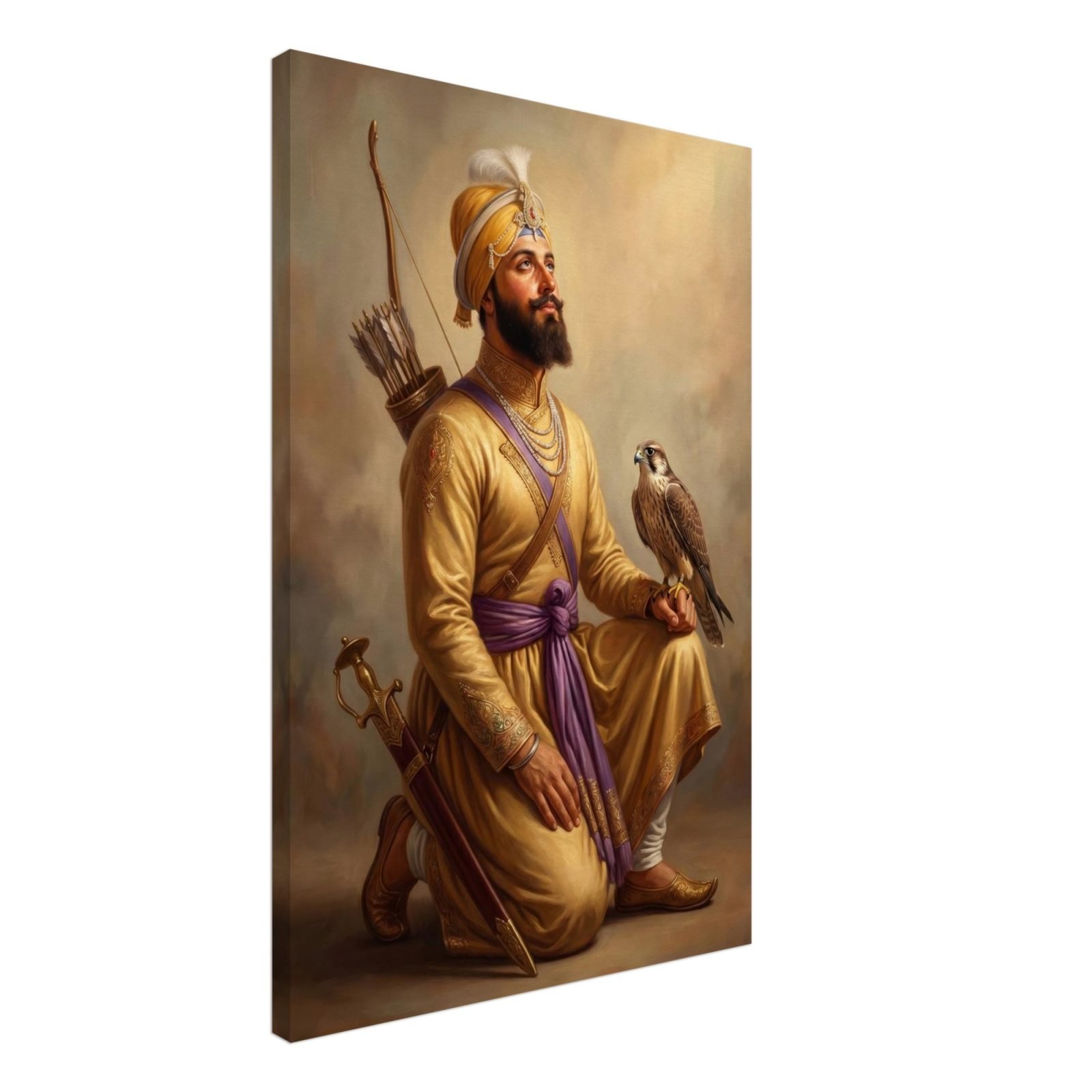
A portrait of Guru Gobind Singh Ji, the Tenth Master and founder of the Khalsa, is one of the most common — and most meaningful — pieces of art a Sikh household will ever hang. But because it's devotional rather than decorative, choosing the right print involves a few considerations that a typical piece of wall art doesn't: where it will hang, how large the wall actually is, what material shows the artwork with the right dignity, and how it should be framed.
This guide walks through each of those decisions.
1. Start with where it will hang
The placement usually falls into one of three settings, and each suggests a different approach:
- A living room or entryway wall — typically the largest surface, and where a framed canvas at 24"×36" or larger reads as a proper focal point rather than an afterthought.
- A dedicated prayer room — often a smaller, more intimate wall. A 16"×20" or 18"×24" framed canvas usually suits the scale of the room better than an oversized piece.
- A Gurdwara hall or community space — these walls are viewed from a distance by many people at once, so a larger canvas (30"×40" and up) with strong framing holds up visually across the room.
Measure the wall before choosing a size. A useful rule of thumb: the artwork should occupy roughly 60–75% of the width of the furniture or focal area beneath it (a sofa, a console table, a prayer stand).
2. Canvas, framed, or acrylic — what's the difference?
Our Guru Gobind Singh Ji portraits are available in three finishes, and the right one depends on the room's existing style as much as personal preference:
Canvas-only (gallery wrap)
Stretched over a kiln-dried wooden frame with the image wrapping slightly around the edges. No visible outer frame — the canvas itself is the finished object. This reads as understated and gallery-like, and suits modern or minimalist interiors.
Framed canvas
The same archival canvas print, set inside a finished outer frame. This is the most traditional presentation for a devotional portrait, and the one most households choose for a formal living room or prayer room wall — the frame adds a sense of occasion.
Acrylic print
The image is face-mounted under a sheet of high-gloss acrylic, which produces noticeably richer colour depth and contrast than canvas. It's a more contemporary look, well suited to modern homes that want the portrait to feel vivid rather than muted.
"Every canvas leaves our print partners on archival matte stock, colour-checked against the original artwork, so the gold on your wall matches the gold we intended." — SikhArtStudio Production Standard
3. Placement and orientation in the room
A few practical notes that matter more than they might seem:
- Eye-line height. Hang the center of the portrait roughly 57–60 inches from the floor — standard gallery height — unless it's above a piece of furniture, in which case center it 6–8 inches above the furniture instead.
- Avoid direct, harsh sunlight. Archival inks resist fading far better than standard prints, but any print will hold its colour longest out of direct afternoon sun.
- Give it room to breathe. A devotional portrait generally reads best with clear wall space around it, rather than crowded next to shelving or other art.
4. Caring for your canvas
Gallery-grade canvas needs very little maintenance. Dust gently with a soft, dry microfiber cloth — never a wet cloth or any cleaning spray, which can damage the print surface. If the canvas is in a humid room (a kitchen, a bathroom-adjacent hallway), keep it away from direct steam exposure.
Choosing a print you'll live with for years
A Guru Gobind Singh Ji portrait isn't a piece you'll replace with the next décor trend — most households keep theirs for decades, often passing them down. It's worth taking the time to get the size, finish, and placement right the first time, rather than choosing on impulse.
Every piece in our Guru Gobind Singh Ji collection is printed on archival, acid-free canvas with fade-resistant pigment inks, at a regional production hub near you, and shipped in discreet, unbranded packaging.